


How can long-term care facilities adopt new technologies without overwhelming staff or disrupting care delivery? Nazareth Home found a way.
Many facilities want better integrations, faster workflows, and smarter clinical tools. But adopting new technology while also keeping staff happy and protecting resident care can be challenging.
The answer is empowering clinical leaders with the right support, the right tools, and the right mindset.
After 22 years at Nazareth Home, I’ve worked across direct care, dementia care, education and clinical leadership, led two EHR implementations, and championed data automation and smart devices. These experiences have shown me how clinical technology can strengthen resident care and staff efficiency.
In this blog, I share my story to encourage more clinical leaders to champion technology from the inside. My goal is to help peers feel less alone by showing how real-world success happens when we move forward together.
When I started at Nazareth Home more than two decades ago, I never imagined my role would evolve into championing clinical technology. I loved direct care and being hands on, but I have always been analytical. I like understanding why something works, quantifying outcomes, and having data that tells a story.
In 2016, our director of nursing approached me with a new challenge. We were using an older system for our MDS work, but we were about to shift fully into an electronic health record. She asked if I would help lead the transition.
At the time, I was a manager on our dementia unit. I said yes because I knew how much information gets lost on paper. I knew how important it was to capture our work in real time and that better documentation meant better resident care.
That decision opened the door to a new phase of my career. I led the implementation of a new EHR, helping staff move from paper to digital workflows. I learned how clinical decisions change when data automation is in place. And when we later transitioned to MatrixCare, I led that implementation, too.
Two EHR rollouts, years apart, with two different systems. Both taught me how to champion technology from the inside. Both showed me how important clinical leaders are in the adoption process. And both made me realize how vital community is when navigating change.
I get asked often how Nazareth Home can pilot new solutions, stay technology-forward, and maintain such strong staff engagement. The answer is that our culture makes it natural.
Here are the biggest reasons we succeed:
Staff adoption only happens when people feel supported, not overwhelmed.

Rolling out an EHR once is a milestone. Rolling out two is an education. Here’s what I learned through both transitions:
The right community makes everything easier
An implementation specialist can guide you and set you up for success, but they are not the daily user. The best advice I ever received came from other facilities using the same system.
Peers understand what implementation feels like on the ground. That is why building community matters so much during technology adoption.
Staff experience must guide the technology
One thing I learned early on is that people do not resist technology, they resist disruption. If a tool feels heavy or complicated, staff feel it instantly.
True technology adoption happens when staff champion it.
One of the most fascinating projects I have led is the pilot of the Truly smart toilet sensors. It sounds unusual at first, but it is one of the most effective solutions we have tested.
These devices detect:
The insights are incredible.
We originally expected a decrease in UTIs, but we also saw a decrease in eye infections on our dementia unit. The device detected residents putting their hands in the toilet to clean it. Once we provided toilet brushes, our infection rates went down.
The device also helped us:
It even helped solve a missing rosary mystery. It had been flushed.
The best part is that the staff did not have to touch the device. We plugged it in, it ran on its own, and it delivered usable data without adding work. That experience shaped our criteria for evaluating new clinical technology.
We now ask one question before piloting anything new. Does this tool add work or remove work?
If it adds work, we pass. If it removes work, we move forward.
This simple benchmark protects staff efficiency, resident care, and keeps our organization open to innovation without burnout.
There are so many tools that it can feel overwhelming. But over the years, I have developed a set of criteria that keeps our decisions focused. Here is what I look for:
It should support staff efficiency, not strain it.
If you are navigating clinical technology right now, here are the most important lessons I can offer.
Build your peer network
Nothing replaces the support of people who have been there. Connect with users, join groups, participate in discussions, and ask questions. Community makes technology adoption feel lighter.
Choose technology that integrates easily
Integration is everything. It improves accuracy, efficiency, and workflow. Choose tools that play well with your EHR.
Protect staff workflow
Your team is your success. Pick technology that lifts them up, saves them time, and fits into the day smoothly. Staff buy-in is the heart of every implementation.
Keep the focus on resident outcomes
Good clinical technology improves quality of life. It helps you spot patterns early, personalize care, and see residents more clearly.
Stay curious and open
The industry is evolving fast. You don’t have to adopt everything, but being willing to explore new solutions keeps your organization ready for what is next.
Clinical technology doesn’t have to feel overwhelming. With the right tools and the right support, it can simplify workflows and elevate your entire care delivery model.
I believe every clinical leader can champion technology. Not by forcing change, but by building community, asking questions, and staying focused on creating a better experience for residents and staff.
We’re in this together. And I hope my story helps you feel supported as you explore what’s possible in your own organization.
Request a demo today for a closer look at MatrixCare.
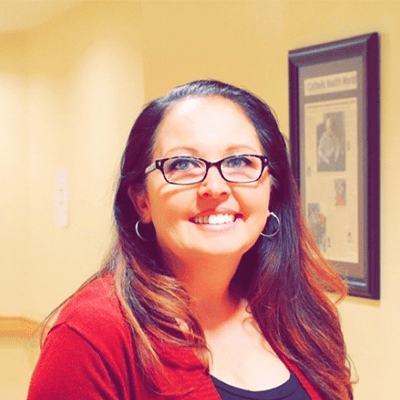
Tracy Fluhr serves as the EHR Clinical Resource Nurse at Nazareth Home, where she has been a dedicated team member since January 15, 2003. Over her more than two decades of service, Tracy has held key roles in Staff Development, Quality Assurance, and as a Nurse Manager overseeing two units. In 2016, she transitioned into her current role, where she has become a driving force behind clinical technology innovation and staff education.
Tracy has successfully implemented two electronic health record (EHR) systems, including MatrixCare in June 2019. She collaborates closely with the Staff Development team to design and deliver education initiatives across both Nazareth Home campuses. Her work focuses on integrating new technologies and applications to enhance care delivery and improve outcomes for the residents Nazareth Home serves.


Start by having a call with one of our experts to see our platform in action.
MatrixCare offers industry-leading software solutions. Thousands of facility-based and home-based care organizations trust us to help them improve efficiency and provide exceptional care.